Problem
Art seekers struggle to find art that feels personal, facing overwhelming marketplaces and no way to visualize what works for their spaces.
Overwhelming Marketplaces
Abundant mass-produced art and intimidating galleries make it hard to know where to start.
Budget + Access Barriers
Tight budgets and limited platforms restrict discovery of unique art.
Generic Options
Mass-produced pieces and no real-time preview weaken personal connection.
Development
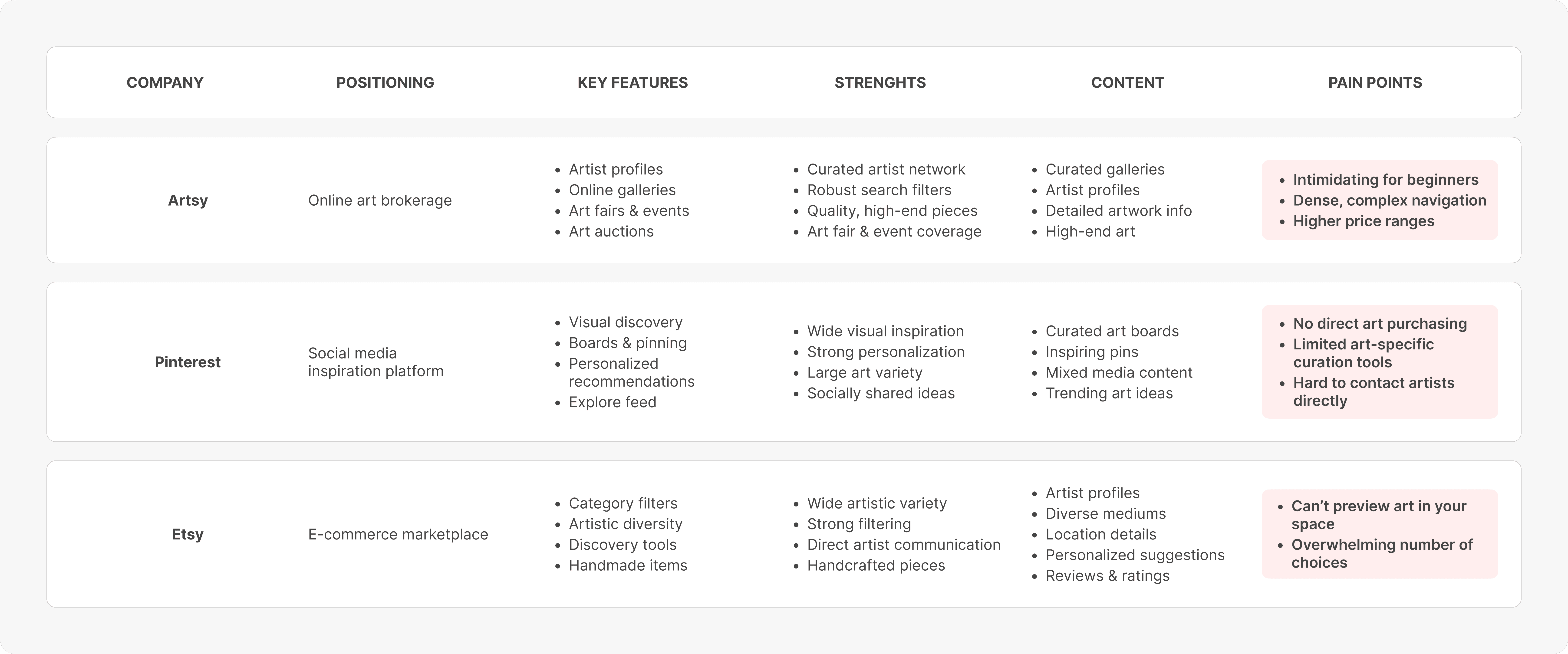
Insights were gathered from research, surveys, and interviews.
I collected what matters most to users and turned those findings into guiding questions.
How can we curate a personalized collection of artworks for art seekers?
How can we elevate our users' virtual art shopping experience?
How can we help art seekers shop with confidence and avoid buyer’s remorse?
Exploration
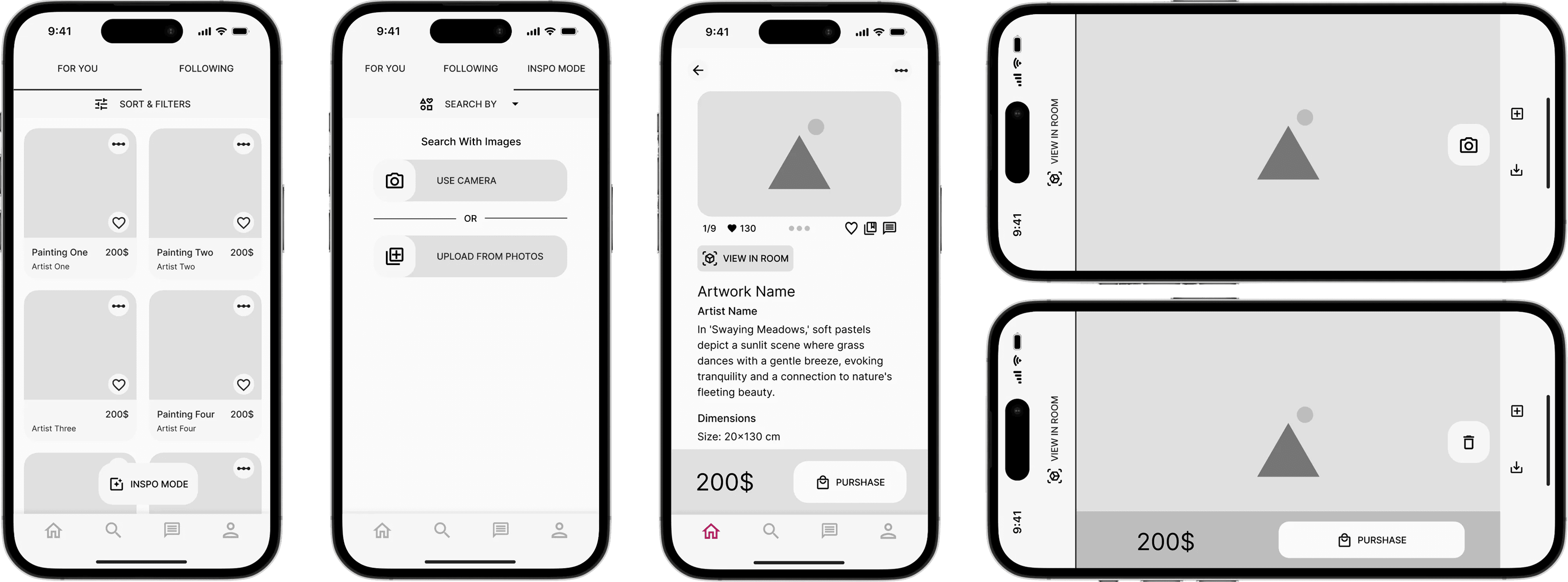
Exploring how users browse, search, and visualize art
The frames explore two versions of Inspo Mode, needed features for the artwork page and the AR layout for placing and capturing artworks.
Designs
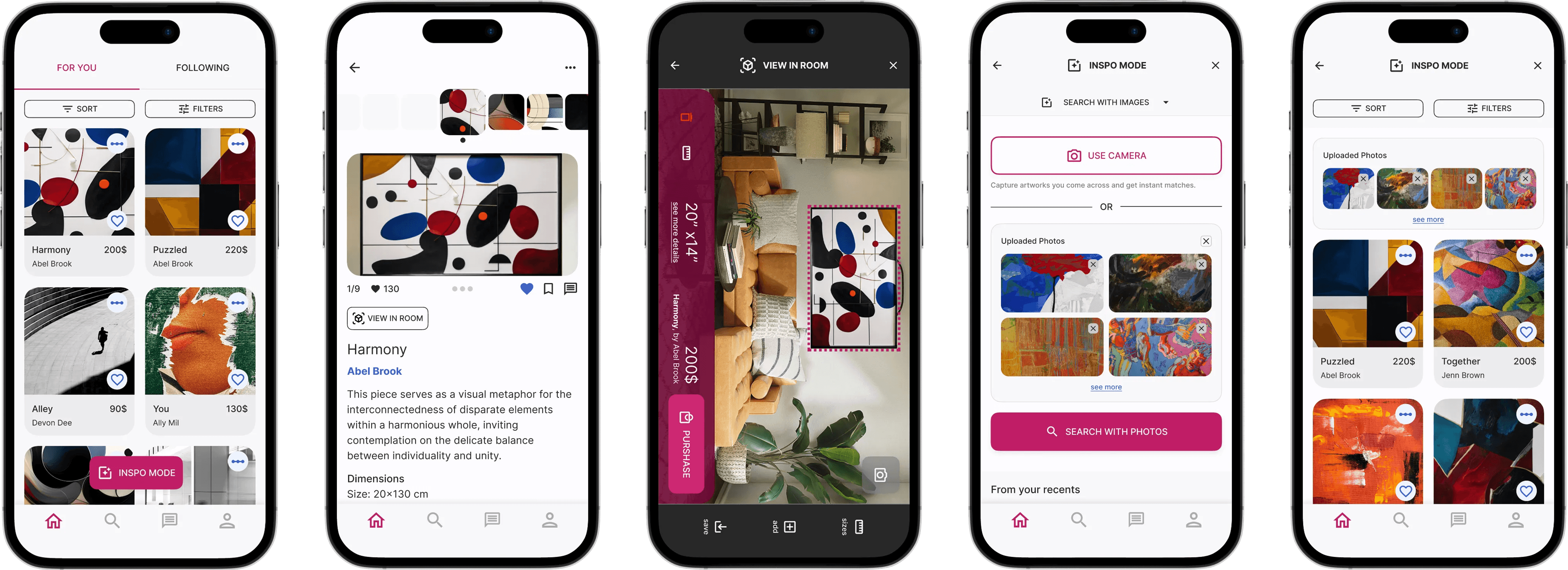
A visual approach to smarter art buying
A tailored feed based on saves, follows, and visual patterns makes browsing intuitive without needing exact keywords.
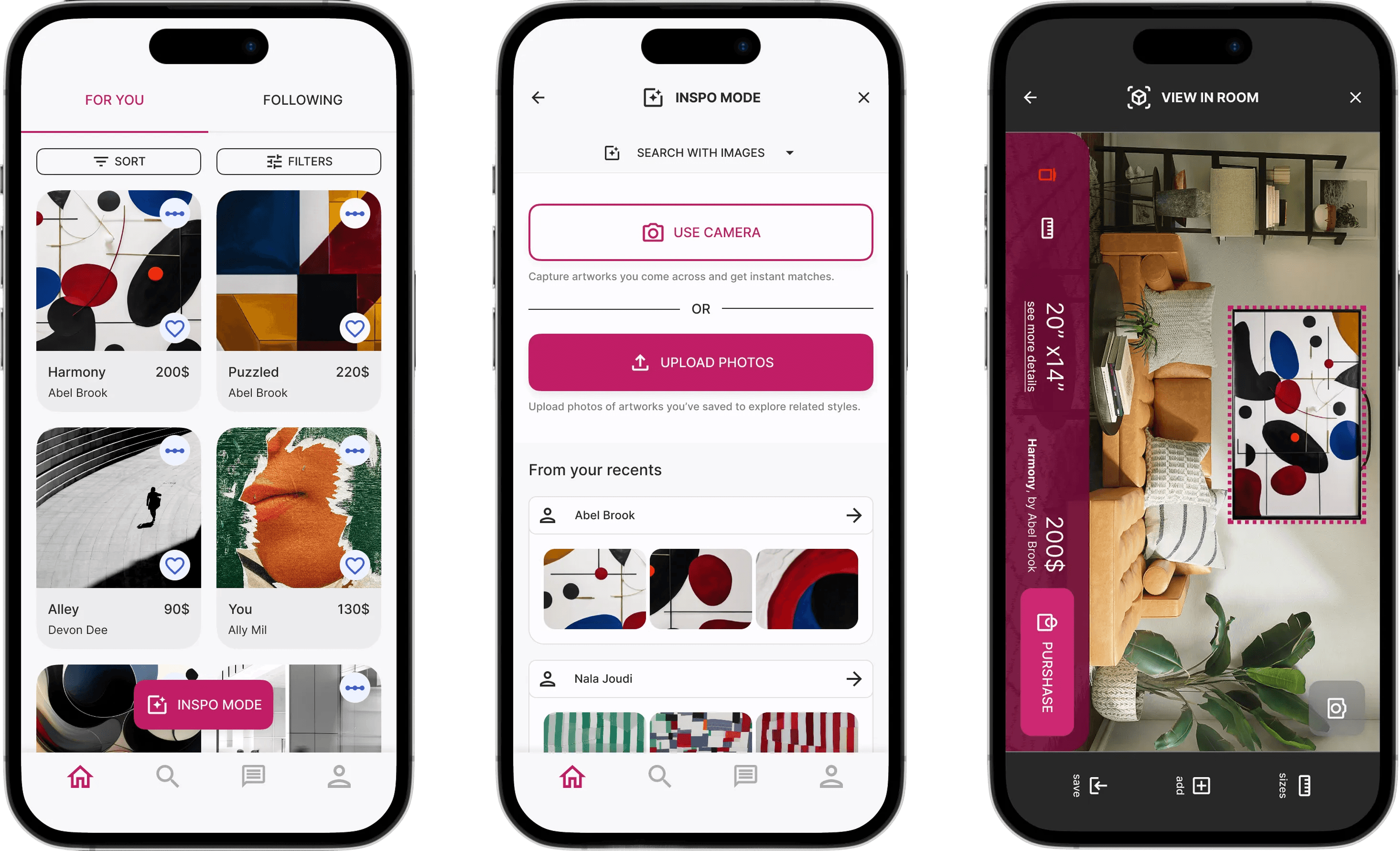
By uploading photos or using the camera, users unlock smart visual matching, connecting real-world inspiration to similar artworks users can purchase.
With AR placement and accurate sizing, users can instantly see how a piece fits their space, helping them make confident purchases.
Inspo Mode: A Direct Path From Inspiration to Artwork Options
Inspo Mode allows users to upload images and take pictures as input, thus replacing long searches with instant visual matches. Inspiration from museum visits, gallery walls, or something saved online is turned into a curated set of similar artworks.

View in Room
"Visualizing how it would fit in my space would be great."
"Being able to see the art displayed in the different areas of the home."
View in Room shows each piece at true scale, helping users judge size and style more easily. Instead of flat photos, they can see how art fits and feels on their own walls. Saved rooms let them revisit placements and add new pieces anytime, making it easy to work on the go.

Technical Considerations
Constraint-based filtering
Apply budget, dimensions and shipping requirements as hard filters before ranking. Only eligible artworks enter the recommendation set; similarity scores cannot override these constraints.
Multimodal retrieval
Encode images and descriptions into a shared embedding space. Combine vector similarity with keyword retrieval, and precompute catalog embeddings to reduce query latency.
Preference-based ranking
Update a user preference embedding from saves, likes and dismissals. Rank eligible artwork by query relevance, preference similarity and diversity, prioritizing explicit preferences over inferred signals.